What is conformal coating?

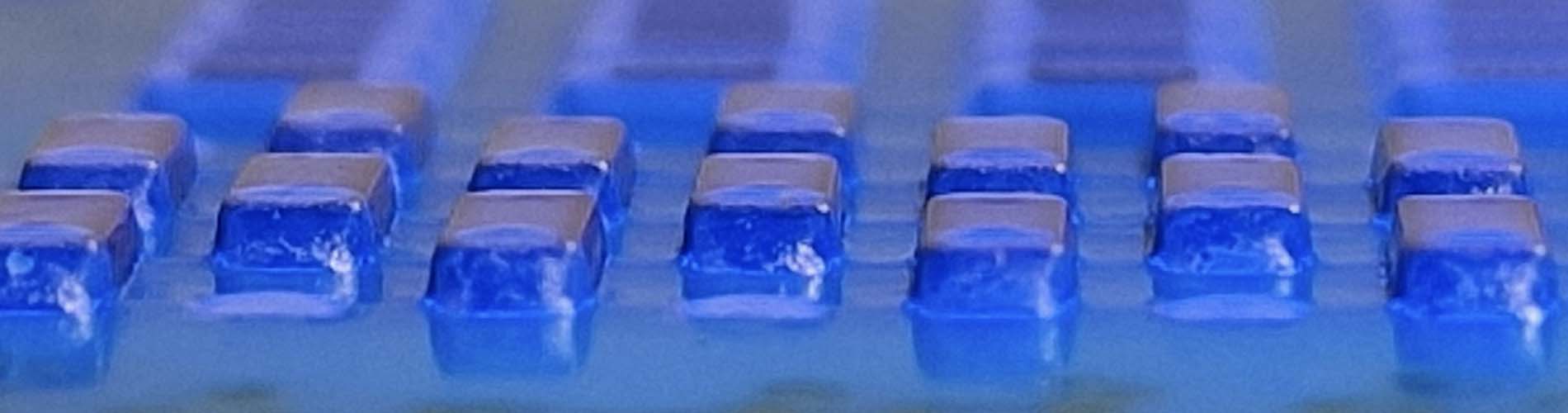
A Conformal coating is a protective chemical coating or polymer film 25-75µm thick (50µm typical) that ‘conforms’ to the circuit board topology. Its purpose is to protect electronic circuits from harsh environments that may contain moisture and or chemical contaminants. By being electrically insulating, it maintains long-term surface insulation resistance (SIR) levels and thus ensures the operational integrity of the assembly. It also provides a barrier to air-borne contaminants from the operating environment, such as salt-spray, thus preventing corrosion.

Some typical application examples include high-reliability defence, automotive and aerospace, where coatings are used to protect against various combinations of moisture, aggressive chemicals and vapours, salt sprays, large temperature variations, mechanical vibration, and even organic attack (e.g. fungus). The protective nature of conformal coatings also means that they not only protect, but also serve to enhance product reliability and thereby reduce the potential cost and damaging effects of early field failures.

As such their use is becoming increasingly common in consumer and domestic applications that can be susceptible to environmentally-induced field failure; including portable devices comprising fine pitch, densely populated assemblies, such as mobile phones, through to washing machines.

How do conformal coatings work?

A conformal coating is a protective barrier that shields sensitive electronic components against harsh environmental conditions such as moisture, chemicals and debris. They are not designed to be a total sealant. Conformal coatings are a breathable protective layer that will protect against the particular environment requirement but will also allow any moisture trapped in the circuit board to escape.

The particular advantages of conformal coatings can be summarised as follows:

  • Insulating properties allow a reduction in PCB conductor spacing of over 80%
  • Can help eliminate the need for complex, sophisticated enclosures
  • Light weight
  • Completely protect the assembly against chemical and corrosive attack
  • Eliminate potential performance degradation due to environmental hazards
  • Minimise environmental stress on a PCB assembly

Ideally, conformal coatings should exhibit the following characteristics:

  • Simple application
  • Easy removal, repair and replacement
  • High flexibility
  • Protection against thermal and mechanical shock
  • Protection against environmental hazards including: moisture, chemicals and other corrosive elements

How do you apply Conformal Coating?

To be effective, a conformal coating should completely cover the assembly and provide good coverage of sharp edges (components and component leads) and other contours (solder joints for example). It may even be essential to coat the edges of the board, as these will not even have any solder resist present.

The effectiveness of the coating is, to some degree, influenced by the efficiency of the application method, which also governs the type of coating used (some suppliers offer dedicated versions of the same coating product to suit different application methods).

There are essentially four main ways of applying a conformal coating:

  1. Dipping - limited to materials that do not cure quickly by moisture, oxidation or light
  2. Selective robotic coating - such as Asymtek, PVA or DIMA. All coating types can be used if the correct dispense head is selected
  3. Spraying - hand spray using a spray booth or aerosol can. All coatings can be applied in this way
  4. Brushing - requires extremely proficient and skilled operators in order to be suitable for production purposes

Finally you will have to consider the curing method determined by the coating selected, air dry, oven dry or UV light cure. The liquid coating should thoroughly wet all surfaces and cure without leaving surface defects. Epoxies are especially sensitive to surface defects. Epoxies can also shrink while setting and may lose adhesion as a result In addition; excessive shrinking during cure can place severe mechanical stresses upon circuit components.

The supplier, to create the special formulation required for a particular application, should be able to modify all of these properties. Other characteristics can also be enhanced. Accessory chemicals and solvents should only be blended with base polymer resins by the coating manufacturer. Plasticisers can also improve mechanical flexibility, and selected solvents in conventional coating formulations can improve adhesion of the cured film.

How much coating will I use and what will the cost be?

This is obviously related to how many boards you process but there is a simple calculation that can give you a reasonably accurate prediction. Solvent based coatings should be applied at 50µm dry thickness; UV coatings will be between 100µm and 200µm, depending on application method.

The calculation is therefore as follows:

Volume per PCB (mL) = [width (mm) X length (mm) X dry thickness (mm) X 100 / %solid] / 1000

Cost per PCB (£/PCB) = [cost (£/L) X Volume per PCB (mL)] / 1000

How do I remove or repair conformal coating?

The coating should be easily re-workable (or repairable) so that solder touch-up can take place when components are replaced. In an ideal scenario the materials used for patching the coating should be of the same generic type as the original assembly coating itself. Additionally, the affected area must be cleaned (or more precisely, pre-treated before re-coating. To fully answer this though we really need to consider each coating group individually:

Acrylics – These are probably the easiest coating to remove and repair. The coating can be removed completely or locally by using specifically designed stripping chemistries. The board can then be re-coated completely of just in area of the repair.

Polyurethanes – These coatings are slightly more difficult to remove due to their chemical resistance capabilities, however they can be removed by using specifically designed stripping chemistries. The board can then be re-coated completely or just in the area of the repair.

Silicone – This is the most difficult coating to remove and the coating least compatible with all of the other coating types. There are no solvents to remove silicone so it may only be removed by abrasion and this will leave silicone contamination on the board surface. Complete removal is virtually impossible so local repair is generally all that is attempted.

UV cure – These materials are also more difficult to repair as they are the most chemically resistant and mechanically tough of all conformal coatings. Removal is possible locally by using powder abrasion. HumiSeal has developed a specific system for removal of our UV40 UV cure material. For local device replacement it is possible to melt through the UV40 coating to de-solder joints. After repair the board can be re coated and cured using short wave UV light.

How easily can conformal coating products be inspected?

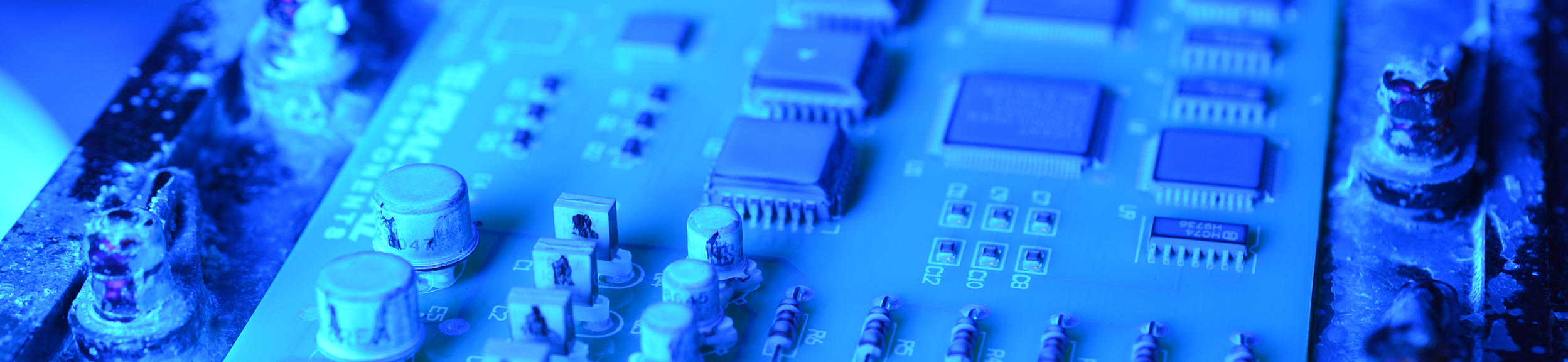
Any conformal coating production process should be visually inspected in production under a UV light. Many approved coatings contain a UV trace that glows with a bright blue luminescence under long wave UV light to make coated and uncoated areas easily detectable. With experience, operators can use the degree of luminescence as a measure of both presence and volume of coating at different locations across a board's surface.

The necessity for inspection becomes evident when one realizes that voids or bubbles can potentially provide a path for moisture to penetrate to the substrate. With automatic coating, a random or pre-selected interval test may be adequate, but 100% inspection is always recommended, and is mandatory in high reliability and safety critical applications. There is a range of dedicated products available for this purpose. It is also important to inspect boards after rework to ensure any re-application of coating material doesn't end up on the inside or underside of devices that should not be coated e.g. Connectors.